Friday, December 11, 2015
Tricks of "Love"
Love is written all over The Great Gatsby. From Gatsby's "larger than life" love towards Daisy, to Jordan and Nick's fling, and to whatever Tom and Myrtle are ( should Nick and Gatsby be on the list too..?). So you can imagine my surprise after reading the psychoanalytic criticism of the book. IT WAS ALL A BIG FAT LIE. The Great Gatsby is more of a bunch of people in relationships to cover up their emotional wounds. All of the relationships presented contain a lot of materialism to replace the lack of emotional connection. Take Tom and Myrtle's relationship for example, Tom doesn't show any signs of grief when Myrtle dies showing the absence of any feelings between the two. Their relationship is also defined by its physical attributes such as the apartment Tom has for the affair or by the dog leash that he gives to Myrtle (which proves to be detrimental to Myrtle, Gatsby, and Wilson). All of the characters find someone who shares their emotional wound and is hence "protected" so to speak from having to work on healing it. Nick is attracted to Jordan because of her "nonchalant" attitude that comforts him; he knows that he won't have to form any bonds with her. Their brief and trivial relationship prove that. Perhaps the easiest relationship to analyze.Tom- Daisy. The affairs that both Tom and Daisy have are the first indications of their shallow marriage. The only thing that they have in common is their disinterest in the well beings of others and their low self- esteem ( no matter how much or what I read, in my heart and mind, Tom is just a jerk). What's also interesting is how Fitzgerald was able to translate a problem that many people experience into a dysfunctional relationship: we often lack self confident, so we try to overcompensate by showing off leading to the desertion of our feelings and common sense ( Daisy stays with Tom at the end). Perhaps Fitzgerald's writings are indications of his own problems...

Saturday, December 5, 2015
The Pursuit of Perfection
"As I went over to say goodbye I saw that the expression of bewilderment had come back into Gatsby’s face, as though a faint doubt had occurred to him as to the quality of his present happiness. Almost five years! There must have been moments even that afternoon when Daisy tumbled short of his dreams—not through her own fault but because of the colossal vitality of his illusion. It had gone beyond her, beyond everything. He had thrown himself into it with a creative passion, adding to it all the time, decking it out with every bright feather that drifted his way. No amount of fire or freshness can challenge what a man will store up in his ghostly heart."
This passage perfectly sums up the idealistic state that Gatsby gets consumed in. In the five years that pass, Daisy becomes more idealistic than realistic, and perhaps that should have been a warning sign for the grim future of their relationship. Gatsby's longing for Daisy, and the wealth she symbolizes, forces him to create a 'perfect' version of Daisy- one with no flaws. While he acquires the wealth, Daisy slips from his reach.Daisy's flaws makes Gatsby question his own perspective of her, and consequently, his view on the wealth and lavish lifestyle she represents. Though, what destroys his ambitions are not Daisy's flaws, but his own delusional dreams. His "illusion" of creating a new life for himself by elevating his social class and getting Daisy consume him. He puts so much "vitality" into polishing this dream that he forgets to make it realistic. No matter how much Daisy changes and acts differently, it will never satisfy Gatsby because his mind and heart are so set on perfecting his dream. This pursuit of perfection leads to the ruining of the "quality of his present happiness", and this pursuit also destroys humans today. We all dream of achieving or acquiring something, and that dream is usually just a pure form of what is actually realistic. Just as Plato said, all the material objects or conceptions we have in our world, the real world, are just shadows and less perfect representations of those objects in the ideal world. Many people, including Gatsby, try to have an ideal object, or person, exist in the real world. Trying to pursue that almost always leads to our downfall, or actual death. Our obsession with it will prevent us from actually enjoying whatever possible happiness we can achieve. Fitzgerald is able to capture one of the human flaws that consumed especially so many people during the 1920s while trying to reach the American Dream.

This passage perfectly sums up the idealistic state that Gatsby gets consumed in. In the five years that pass, Daisy becomes more idealistic than realistic, and perhaps that should have been a warning sign for the grim future of their relationship. Gatsby's longing for Daisy, and the wealth she symbolizes, forces him to create a 'perfect' version of Daisy- one with no flaws. While he acquires the wealth, Daisy slips from his reach.Daisy's flaws makes Gatsby question his own perspective of her, and consequently, his view on the wealth and lavish lifestyle she represents. Though, what destroys his ambitions are not Daisy's flaws, but his own delusional dreams. His "illusion" of creating a new life for himself by elevating his social class and getting Daisy consume him. He puts so much "vitality" into polishing this dream that he forgets to make it realistic. No matter how much Daisy changes and acts differently, it will never satisfy Gatsby because his mind and heart are so set on perfecting his dream. This pursuit of perfection leads to the ruining of the "quality of his present happiness", and this pursuit also destroys humans today. We all dream of achieving or acquiring something, and that dream is usually just a pure form of what is actually realistic. Just as Plato said, all the material objects or conceptions we have in our world, the real world, are just shadows and less perfect representations of those objects in the ideal world. Many people, including Gatsby, try to have an ideal object, or person, exist in the real world. Trying to pursue that almost always leads to our downfall, or actual death. Our obsession with it will prevent us from actually enjoying whatever possible happiness we can achieve. Fitzgerald is able to capture one of the human flaws that consumed especially so many people during the 1920s while trying to reach the American Dream.
Tuesday, November 24, 2015
The American Dream
The American Dream has always been fueled by desire. It has been the driving force of our societies.Our country's foundation and development has been based on the wish of "having more". Puritans wanted more religious freedom when they resettled in New England. Later, Americans heading west were in want of more natural resources and job opportunities. Immigrants wanted more successful lives in the US. In the 1920s, the disintegrating structure of society caused this desire to become a senseless craving and pursuit of materialism. People started to yearn for more objects and a better social caste in a try to compensate their personal deficits. The Great Gatsby reflects on that toxic desire that swept through society. Nick, the first character we meet, moves to the East coast in hopes of finding more excitement than he experienced in the Midwest.Gatsby is another perfect example, he spends a great deal of money and time on throwing parties he doesn't even enjoy that much, "..just as it began my eyes fell on Gatsby, standing alone on the marble steps and looking from one group to another with approving eyes". Gatsby throws these extravagant parties, well because he can, and as we later learn, in hopes of seeing Daisy. His emotional detachment is made up for by flaunting his wealth and climbing the social ladder by doing so, at least to West Egg residents. The only reason guests attend his parties is because they think that they're experiencing the glamour of the American Dream. This shows how shallow and materialistic people have become, attending Gatsby's parties is just another way to enjoy the consumerist perks and to maintain their social standings. Even today, we still see this desire taking over our societies. With each year, the increasing desire to buy more objects at cheaper prices has caused Black Friday to occur earlier and earlier. Although displayed differently, the same toxic desire The Great Gatsby explores is still threaded within our societies. So as long as we desire, will the American Dream ever be over ?

Friday, November 20, 2015
The Happiest Day of My Life
December 30th, 2010. Almost half a decade ago.That day was truly one of the happiest days of my life, or at least that's how I remember it. Perhaps it was the clear sunny skies, the approaching New Year's Eve party, or the amazing movie I was watching. We had just recently moved in to our new house - I finally had a room to myself- and we were getting ready to host some family and friends over for New Years. Life was good.
Back then, everyone was happy, at least that is what they appeared to be. I had absolutely no worries on my mind, but then again I was only in sixth grade. I wasn't worrying about college nor AP English ( :) ) nor for some big-mouthed idiot running for president, nor for my country that would tear my heart as it breaks on the map. See, I don't even remember what I did that day to yet along remember the weather outside, but if I do remember something, it is that I was happy.Back then, I had never known the cruelty of this world because my surroundings were peaceful. The details of that day don't matter as much as how I remember that day.That day probably wasn't as picture perfect as I envision it right now, but after all the experiences I have been through, my mind searches for that memory that can be claimed as a "happy" memory. In The Glass Castle, Jeannette remembers the earlier parts of her childhood as being adventurous and exciting, it is only as her memory progress that she starts admitting the negative and dysfunctional parts of her childhood. The trauma she experienced affected the way she views her memories. The same goes to Vladek, he always remembers his time with Anja as being wonderful because it's the only part of her that still lives with him in his memories.The past always seems to be a much happier time... and that's why I love the picture above so much, because for a second or two, time stood still and our happiness was captured forever.
 |
| Our New Year's Eve Group Picture |
Saturday, November 14, 2015
True Freedom
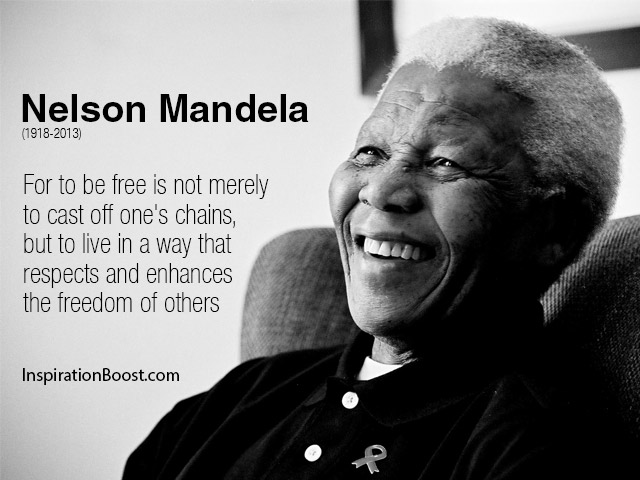
free·dom (n): the
power or right to act, speak, or think as one wants without hindrance or
restraint; the state of not being imprisoned or enslaved
Freedom.
The sight of this word evokes so many emotions. It holds within it so many past
struggles and future aspirations. Freedom is not to be touched or held, but it
is to be felt. African-Americans had to fight long for their physical freedom-
and even longer for their social freedom. Even after they were freed from the
chains, the chains still existed-only they were invisible now; these
chains protruded their lives and controlled their destiny.
In The
Bluest Eye, Cholly and the old ladies are described as being
"free", so what does that really mean? In the old ladies's case,
being free is a result of a lifetime of racial abuse.They no longer have to
deal with any racial abuse from any white employer or any abusive
spouse. "They were old enough to be irritable to be when and where
they choose...They were, in fact and at last, free". All the
"terror", "wickedness","tears",
"serenity", and all the other experiences they have been through have
cascaded to this point in their lives in which they can truly live free because
there is nothing left for them to fear and/or look forward to. Their freedom
has resulted from living a complete life- not necessarily a good one.
Cholly also feels free
after discovering that his dad is a jerk, " ...Cholly was free.
Dangerously free. Free to feel whatever he felt..". The freedom he
experiences arises from a lack of care he has experienced. Since he never had a
parent growing up, he never got to experience joy, love, or happiness. The
freedom he experiences is toxic; it forces him to
do ludicrous actions, and it is as if he is trying to compensate for
all the experiences he missed out on. He becomes immune to his
surroundings.Perhaps that is why he rapes his daughter; in his dangerous
freedom, abuse is all what he knows how to show.

Friday, November 6, 2015
Why Want Blue Eyes ?
We all spend our days waiting for that one thing that will make our lives better: a better phone, a bigger house, or a longer vacation; in The Bluest Eye, Pecola yearns for something much simpler, blue eyes, yet it holds such a powerful effect on her. Pecola accepts the ugliness that "every movie" "every billboard" and "every glance" assigns her. She absorbs all the subtle discrimination she sees, not only from the whites but from black men too, against black beauty. Blue eyes, in her eyes, are the solution to attain "beauty"; being beautiful is synonymous with being white. In her everyday life, Pecola sees but is never seen. She sees the disgust in people's faces towards her, but she is never acknowledged by the boys nor her classmates nor her parents. She wants to have blue eyes because she wants to be seen, she wants to be acknowledged, and she wants to be beautiful, for once. "If she looked different, beautiful, maybe ...they'd say... 'We mustn't do bad things in front of those pretty eyes'", Pecola believes that if she had blue eyes, then people would respect her - because she is "beautiful"- and not act disrespectfully around her. Changing the medium that she looks through will change the way people act around her. What if wanting blue eyes was just a method sickly-twisted by society to deal with the past, present, and future? Through our eyes, we witness our everyday lives, it is with them our memories have been formed, and out of them we predict our futures. By wanting different eyes, Pecola wants a different life for herself: better memories, a more pleasant present, and a brighter future. It's with them she experiences the difficulties in growing up as a black girl with crazy detached parents. By changing her eyes, she can just magically wipe away her traumatic past and replace it with a more 'beautiful", "cleaner" one that is associated with the "American Dream" that fake, blue-eyed white families represents. She craves for a childhood where she can play with dick and the dog and the cat instead of having to bear her parents' fight; blue eyes, in her perspective, will get her that.
While everyone dreams of blue eyes, it's ironic that they started out as a mutation in the genes...
Saturday, October 31, 2015
Toys Are More Than Just Toys
Growing up, we all had a certain toy that we were attached to; a toy that would end any tantrums we threw or make family visits bearable, but in the end it was just a toy, right?
It was just plastic molded into different shapes topped with some sirens or clothes and "hair" to make it more realistic. What's not realistic, however, is how we claim that "toys are just toys". We, as a society, fail to acknowledge and solve that toys instill gender roles in kids' perspectives from a young age. Toys impact the way kids perceive the opposite gender and their own too, watch this for an example. Toys, however, are not to blame entirely; the fault lies in society's expectations, toys are merely just another device that these sexist expectations are transmitted in our lives.
The patriarchal perception of women is amplified through toys that focus on girls' appearances and ability to perform house chores. Most of the toys are either dress-up - that come with a house to manage of course- or baby dolls; we condition girls from a young age to take care of babies as if it is their only potential. In Our Barbies, Ourselves, Prager shows how women are also overly sexualized in kids' toys too, "Why, I wondered, was Barbie designed with such obvious sexual equipment and Ken not?". Girls are taught to care more about how they look than their capabilities.

 Boys also experience a similar problem: most "boy" toys aim at macho activities. Toys seem to encourage the violent and overly masculine side of boys; most of them are either superheros or men that have a job. This puts pressure on boys to become the "head of the household" so to speak. These gender roles make it hard for kids to enjoy their childhood and future, this girl understands it. To solve this problem, we must fix our society by breaking those gender roles stereotypes. We should encourage both girls and boys to inspire and become anything they want, be it an astronaut or a chef. Toy manufacturing companies can help with this by creating toys that encourage creativity and inspire children instead of confining them to gender roles. so the next time you see a kid, encourage them to become whatever they want to be !
It was just plastic molded into different shapes topped with some sirens or clothes and "hair" to make it more realistic. What's not realistic, however, is how we claim that "toys are just toys". We, as a society, fail to acknowledge and solve that toys instill gender roles in kids' perspectives from a young age. Toys impact the way kids perceive the opposite gender and their own too, watch this for an example. Toys, however, are not to blame entirely; the fault lies in society's expectations, toys are merely just another device that these sexist expectations are transmitted in our lives.
The patriarchal perception of women is amplified through toys that focus on girls' appearances and ability to perform house chores. Most of the toys are either dress-up - that come with a house to manage of course- or baby dolls; we condition girls from a young age to take care of babies as if it is their only potential. In Our Barbies, Ourselves, Prager shows how women are also overly sexualized in kids' toys too, "Why, I wondered, was Barbie designed with such obvious sexual equipment and Ken not?". Girls are taught to care more about how they look than their capabilities.

 Boys also experience a similar problem: most "boy" toys aim at macho activities. Toys seem to encourage the violent and overly masculine side of boys; most of them are either superheros or men that have a job. This puts pressure on boys to become the "head of the household" so to speak. These gender roles make it hard for kids to enjoy their childhood and future, this girl understands it. To solve this problem, we must fix our society by breaking those gender roles stereotypes. We should encourage both girls and boys to inspire and become anything they want, be it an astronaut or a chef. Toy manufacturing companies can help with this by creating toys that encourage creativity and inspire children instead of confining them to gender roles. so the next time you see a kid, encourage them to become whatever they want to be !
Saturday, October 24, 2015
8 Things You Learn From a War
Whether you've personally endured a war or have/had any loved ones in a war, new customs emerge in your life.
1) Whatever war you're enduring or have endured becomes a time reference in your conversations. In Maus, the Holocaust cuts Vladek's life into 2 parts- before and after the war. It's as if the war restarted his life all over again. Whenever we need to describe objects or events in my family, the Syrian Civil War somehow becomes a referencing point. A very typical conversation can go like this: " Hey mom do you remember that shirt I got?" "Which one?" " The one I bought before the war" or even better "Zaina is celebrating her wedding anniversary today" "How long have they been married for?" "They married before the war" "Dang that's a long time".
2) You figure out who your true friends are during troubling times. In case you were wondering, someone getting you a pumpkin spice latte does not count as saving your life. Anja and Vladek realize the true value of a friend after they are turned down by Richieu's governess even though she offered help previously, " You'll bring trouble! go away! quickly" (136). If after a war, your religion, race, and political opinions don't scare off your friends, then you got yourself some keepers.
3) Your daily conversations revolve around the availability and prices of food. At dinner, Vladek and Anja are discussing the food rations that are available with their family, "Each of us gets a coupon for 8 ounces of bread a day..." (75). In Syria, resources have been low; so every phone call, Whatsapp message, or Facebook post with my family back in Syria ended up with bananas. You might ask, why bananas? Perhaps because last summer, 2 pounds of bananas cost about $22. So getting the update of the prices of goods becomes a part of your daily routine.
1) Whatever war you're enduring or have endured becomes a time reference in your conversations. In Maus, the Holocaust cuts Vladek's life into 2 parts- before and after the war. It's as if the war restarted his life all over again. Whenever we need to describe objects or events in my family, the Syrian Civil War somehow becomes a referencing point. A very typical conversation can go like this: " Hey mom do you remember that shirt I got?" "Which one?" " The one I bought before the war" or even better "Zaina is celebrating her wedding anniversary today" "How long have they been married for?" "They married before the war" "Dang that's a long time".
2) You figure out who your true friends are during troubling times. In case you were wondering, someone getting you a pumpkin spice latte does not count as saving your life. Anja and Vladek realize the true value of a friend after they are turned down by Richieu's governess even though she offered help previously, " You'll bring trouble! go away! quickly" (136). If after a war, your religion, race, and political opinions don't scare off your friends, then you got yourself some keepers.
 |
| A Syrian Refugee carried his injured friend on a journey across Europe |
4) You realize that you take your life for granted and that you should start living life to the fullest.
Art has an easy life compared to the atrocities his father had to experience in his life; he never has to think twice about the luxuries he enjoys because they were never taken away from him. You start to realize how much you take for granted; failing a test isn't the end of the world. Heck if refugees have the will and effort to continue to seek for education, then why I am complaining about my school? That also pushes you to enjoy life more because you never know when it might be taken away from you.
 |
| Makeshift school in a refugee camp |
5) You feel guilty. You feel guilty for surviving. You feel guilty for not going through it- like Art does. You feel guilty for abandoning your family. You feel guilty for abandoning the war. You feel guilty for fighting. You feel guilty for not fighting. You feel guilty about everything and anything and you don't know what to do about it.
6) You understand the sadness when families are broken apart. Vladek and Anja not only had to be separated from each other, they had to lose their son too, and Vladek still has to deal with that trauma. The Syrian Jack and Rose:
 |
| “My husband and I sold everything we had to afford the journey. We worked 15 hours a day in Turkey until we had enough money to leave. The smuggler put 152 of us on a boat. Once we saw the boat, many of us wanted to go back, but he told us that anyone who turned back would not get a refund. We had no choice. Both the lower compartment and the deck were filled with people. Waves began to come into the boat so the captain told everyone to throw their baggage into the sea. In the ocean we hit a rock, but the captain told us not to worry. Water began to come into the boat, but again he told us not to worry. We were in the lower compartment and it began to fill with water. It was too tight to move. Everyone began to scream. We were the last ones to get out alive. My husband pulled me out of the window. In the ocean, he took off his life jacket and gave it to a woman. We swam for as long as possible. After several hours he told me he that he was too tired to swim and that he was going to float on his back and rest. It was so dark we could not see. The waves were high. I could hear him calling me but he got further and further away. Eventually a boat found me. They never found my husband.” (Kos, Greece) ( Humans of New York) |
7) You start to understand how evil the world can be. But even with that, the extent of evilness in this world surprised you every time. Every news article makes you question humanity, how can humans be that bad to each other?
 |
| “Before leaving for Europe, I went back to Syria to see my family once more. I slept in my uncle’s barn the entire time I was there, because every day the police were knocking on my father’s door. Eventually my father told me: ‘If you stay any longer, they will find you and they will kill you.’ So I contacted a smuggler and made my way to Istanbul. I was just about to leave for Europe when I received a call from my sister. She told me that my father had been very badly beaten by police, and unless I sent 5,000 Euro for an operation, he would die. That was my money to get to Europe. But what could I do? I had no choice. Then two weeks later she called with even worse news. My brother had been killed by ISIS while he was working in an oil field. They found our address on his ID card, and they sent his head to our house, with a message: ‘Kurdish people aren’t Muslims.’ My youngest sister found my brother’s head. This was one year ago. She has not spoken a single word since.” (Kos, Greece) ( Humans of New York)\ |
8) .... But it still makes you believe in the good of people. If you're on the fence about that, watch this
 |
| “After one month, I arrived in Austria. The first day I was there, I walked into a bakery and met a man named Fritz Hummel. He told me that forty years ago he had visited Syria and he’d been treated well. So he gave me clothes, food, everything. He became like a father to me. He took me to the Rotary Club and introduced me to the entire group. He told them my story and asked: ‘How can we help him?’ I found a church, and they gave me a place to live. Right away I committed myself to learning the language. I practiced German for 17 hours a day. I read children’s stories all day long. I watched television. I tried to meet as many Austrians as possible. After seven months, it was time to meet with a judge to determine my status. I could speak so well at this point, that I asked the judge if we could conduct the interview in German. He couldn’t believe it. He was so impressed that I’d already learned German, that he interviewed me for only ten minutes. Then he pointed at my Syrian ID card and said: ‘Muhammad, you will never need this again. You are now an Austrian!’” (Kos, Greece) |
Saturday, October 17, 2015
Dealing With the Past
A part of what makes us is in the past, and not just in our pasts, but in our parents's and grandparent's pasts too. All the experiences that our parents and grandparents went through play a part in shaping our perspective of the world. We often spend most of our lives trying to understand the experiences that influenced them and tracing their effect on us. Art Spiegelman uses Maus as a way to understand his father's past and to deal with his guilt. Vladek makes Art feel guilty for not experiencing the Holocaust, like he did. On page 51( volume I), Vladek hammers Art for growing up privileged and having delicate hands because he never did manual labor, "LIKE YOU, ARTIE, MY HANDS WERE ALWAYS VERY DELICATE". It is as if Maus is Spiegelman's way of "repaying" his dad for not witnessing the holocaust by sharing Vladek's story with the world. On page 16 ( volume II), Art admits to the guilt he feels for not experiencing the same trauma his parents did, " I GUESS IT'S SOME KIND OF GUILT ABOUT HAVING HAD AN EASIER LIFE THAN THEY DID". Spiegelman is obviously curious about his father's past and he wants to understand it so he can better understand his father, On page 12 (volume I), Spiegelman emphasizes his desire to hear the story by italicizing the subject I, "I WANT TO HEAR IT". Whether it's our parents' first love or first job, we all want to know more about what shaped our parents' lives, but sometimes there is a barrier we can not overcome. In Jim Powell's book Postmodernism, he discusses, [... Thus, any art attempting to to represent the Holocaust should continue to haunt us with its inability to represent the unrepresentable, to say the unsayable]. The world tries to depict the horrors of the Holocaust in books, movies, and art; however, it was such an atrocity that we will never be able to truly fathom what it was. While Spiegelman works to abridge the gap by presenting Vladek's life, he knows that there are certain things he will never be able to represent, "THERE'S SO MUCH I'LL NEVER BE ABLE TO UNDERSTAND OR VISUALIZE" ( page 16, II). While my grandpa was visiting us last weekend, I had my phone recording while he was telling me the story of how his family was kicked out of Palestine. I did this because I wanted to know more about my grandpa's childhood and so know I understand that the tough circumstances my grandpa went through is what makes him seem tough on the outside. Being aware of the past helps us understand our present and predict our futures/
Watch this for an interesting study.
Watch this for an interesting study.
Sunday, October 11, 2015
The Power of Colors
Saturday, October 3, 2015
First World Problems Syndrome
Remember
when you had to wait for the water to heat for a minute to take a shower and you
complained because you started to get cold? Remember when you criticized
America's secret plot to make you obese with its big portions and then you
threw the leftover food away? Remember when you had a bad day because you could
not find that prefect dress or suit in your size? Remember when you got stuck
in traffic and whimpered about missing your favorite show? If you're worried
that this is going to be another cliché moral story, then you are absolutely correct. We, as
citizens of first world countries, often get consumed in negligible everyday problems that we forget to appreciate the
beautiful and facile life we have; something known as First World Problems
Syndrome. Every one of us is guilty of it, myself included. Perhaps I am
writing this to somehow absolve myself from the times that I did complain or
perhaps I am writing this on a gloomy Saturday morning to
remind myself of the blessed life I enjoy; it does not matter why I am writing this, all that
matters is that I am. We always
envision ourselves as being the center of the universe, and that everything and
anything anyone or everyone does is to purposely harm. Wallace mentions this
idea in his speech," There
is no experience you've had that you were not at the absolute center of". We tend to forget that we share this life with each
other, that our experiences, problems, and perspectives are interwoven together
like a thread ball, and that the person next to us has a different perspective
on the same problem (probably one with him or her at the center of the
problem). Most of us have had an easy upbringing, one where we worried about
what costume we were going to wear for Halloween and not how we were going to
get clean water to drink. As a result, it is harder for us to appreciate the
luxuries we have and so it takes more will and effort to constantly remind
ourselves that we are not the center of things; that our problems are insignificant to other people, or as Wallace
once said, "it's a matter of my choosing to do the work of somehow altering or
getting free of my natural, hard-wired
default-setting, which is to be deeply and literally self-centered, and to see
and interpret everything through
this lens of self". So the next time you want to complain about your life, look around yourself- make sure to stare directly at any light that is powered by 24/7 electricity, take
a hot bath while watching Netflix on your IPad, have some hot chocolate while
you watch the snowfall in your warm, cozy house- and appreciate the lifestyle
you have.
Check out the links :
First World Problems in Africa
First World Problems
Saturday, September 26, 2015
Why I Sometimes Pretend to Hate Cooking
Do I really hate cooking ? Of course not. Why would anyone despise the mechanism that puts perfectly wrapped and aligned grape leaves (if you don't know what I am talking about then you are missing out on a lot) and shinning baklava squares on his or her plate ?
Ever since I was a kid, my only concern has been to hammer down all the family recipes before I leave to college, and so far my record stands at 0. It's not that I don't enjoy cooking, but every time I go into the kitchen I feel like I'm submitting to the enemy. In the Smoke Signal, Victor explains to Thomas the Native American stereotype of looking stoic and mean; as an equivalent, stereotypical Middle Eastern girls have excellent culinary skills. However, in Middle Eastern societies, it is more of a prerequisite for girls to be successful in life - or just in marriage because that pretty much equates to success in the Middle East- than just a stereotype. Most of the time, when a girl cooks, it is not to fulfill her creative cravings nor to express herself through cooking, but it's mainly for her "man". So that when he comes home from work or when he wants to invite his buddies over, he'll have someone to cook for him. Cooking has become a way to confine women in the same way Stanton felt that women were oppressed by the laws, "He has compelled her to submit to laws, in the formation of which she had no voice". Cooking becomes an instrument to subjugate women, to place them in a kitchen - whether they like it or not- and make them feel it's their duty to feed their grown-up husbands. That's why I hate cooking; not because I don't like cleaning up ( although I have to admit, it's not my favorite part) or I don't like munching down grape leaves at a rate of 52 per minute, it's that society - mostly men and potential future obnoxious mother-in-laws- is judging me not based on my character but based on how well I can satisfy its food cravings.


 |
| Grape Leaves |
 |
| Baklava |

Sunday, September 20, 2015
The Final Farewell
I don't recall saying goodbye. That second to last night I had a sleepover with all my cousins, and we stayed up all night, and the next day we all had traditional Syrian breakfast together. When I had to leave and visit my grandma, they barely acknowledged me. I glimpsed at their faces and shrugged not knowing it would be three more years until I see them again.
At a random instant that day it's likely that I heard the first artillery shelling sounds - I simply don't remember- but all I know is that by the time I went to bed I was awake with wide open eyes mistaking the air conditioner sound for a military chopper. Close to ten the next morning, I tried to fit thirteen years into two suitcases; I finished packing and looked around my room, and I recognized all things that couldn't fit: my friends, my memories, my family, my home, my school, my childhood, my language, and most dear to my heart, my country. I went to the living room and tried to act nonchalantly, but I was secretly praying that this house will be left standing for my children to see. For some reason, a sting in my heart, I knew my prayers wouldn't help. I glanced around the house one last time, put my pajamas on my bed, grabbed my suitcases and got in the car, and went far far away from home.
The day was sunny, I traveled past an empty street with foreign sounds, past my childhood and across the border, and then to Troy, where I found peace, but I haven't been home again. I changed, but it has only made me more nostalgic. I was selfish. I abandoned my country.
 |
| Damascus, Syria |


Subscribe to:
Posts (Atom)