Friday, April 29, 2016
Words ARE Powerful.
When it comes to the Palestinian-Israeli conflict, there is one thing that we cannot ignore: the influence of media. Each side utilizes language as a mean to twist and depict the conflict so it advances their ideological propaganda. Not only does this selective reporting exist in media outlets, but it also infects Educational material. In Palestine in Israeli School Books ( Nurit Peled- Elhanan), the author points out, "The school book was republished with minor changes that were apparently very important to this [Israeli] government... one of these things was the replacement of 'ethnic cleansing' regarding the Palestinian exodus in 1948, with 'organized expulsion'". Peled-Elhanan shows how the wording of a historical event has tremendous effect on its perception; in this case, the transition from a heinous crime-sounding description to a more structured mishap convey a less horrific event. In the Palestinian counterpart ( and most Middle Eastern countries), the terms 'Jewish' and 'Israeli' are used both interchangeably and exclusively. Doing so, they turn the conflict into a religious quarrel, thus enabling the harassment of an entire religion. In another instance, Israel refers to the West Bank as "Judea and Samaria" while Palestinians refer to it as the "Occupied West Bank". Just as Pinker points, "The wording is ambiguous. Does it mean 'some of the territories' or 'all of the territories' ?" ;this disparity rose from the vague language in Resolution 242. Likewise, Okrent would agree with the powerful implication of words, " 'targeted implications': the Israel Defense Forces use this term; Palestinians believe it implicitly exonerates Israel for the death of nearby innocents'". Likewise, Palestinian authority might describe Israeli stabbing victims as "violent jewish settlers who should suffer just as much as we [Palestinians] suffer". On the other hand, Kakutani dismisses the importance of acknowledging the power of words. She argues,"Getting upset by phrases... tends to distract from the real problems of prejudice and injustices that exist in society...". What Kakutani fails to address is that language prejudice not only stems from injustice, but it ENCOURAGES the oppression of the minorities it targets. So while the phrasing of the Palestinian exodus as an "organized expulsion" is not the most crucial problem Palestinians face, it prolongs the defamation of their history. No matter what side is operating, both manipulate language to validate violence. As Orwell once said, "Defenseless villages are bombarded from the air, the inhabitants driven out to the countryside...the huts set on fire with incendiary bullets: this is called pacification". In an effort to justify their crimes, countries resort to euphemisms and innuendos. I will leave you with my favorite Voltaire quote:

Friday, April 15, 2016
The Ultimatum

Freedom versus safety; the ceaseless debate
about the priority of either one has transcended into our laws and society
expectations. H. L. Mencken's quote, “The average man does not want to be
free. He simply wants to be safe.”, added to the already fueled conversation.
If we wish to trace the verity of this concept on society nowadays, we must
first explore the abstract meaning of both being "free" and
"safe"- as both of them are subjective. Does "safe" imply
physical safety, such as police security, or ,rather, a mere sensation of a
united community ? Often so , what we perceive as "safety", is
usually just an illusion of safety. Is "freedom" the
literal ability to move around or the capacity to be free from society's
beliefs and expectations ? No matter what each word symbolizes to an
individual, it is very evident which one is being prioritized nowadays.
For example, with society's expectations influencing personal decisions more
and more, many opt to pursue a "safe" career choice rather than
practice what they are truly passionate about. They believe that the prospect
of having a decent salary, a roof above their heads, and food on their table
will compensate the void that may feel due to the lack of personality they
exhibit in their daily life. Perhaps another example that is more relevant to
Mencken's quote (as it was published during a time of political turbulence) is
the Patriot Act. This act allowed federal agencies to surveil electronic
communications; however, it raised civil rights issues as it was used to
justify the collection of personal information and calls. Supporters of this
act usually validate it by stating how "they have nothing to hide"
and how they are willing to give up some of their privacy in order to help
prevent terrorism. As a society, we are more comfortable with handing in some
of our freedoms so that we are more protected, or at least feel so. We have
chosen the freedoms of safety over the risks of freedom.
Thursday, March 24, 2016
The Fault in our News ?

ter·ror·ist
ˈterərəst/
noun
- a person who uses terrorism in the pursuit of political aims
It is such a pity that the world has become so accustomed to terrorist attacks around the world as if they are a normal and expected part of our routine. But what is even more disheartening is how the media presents each incident. You see, terrorism has an exception: whiteness.
For example, in the tragedy of Charleston, where a white gunman opened fire in a black church, the media coverage was biased to say the least. The first comments that the media made were how the shooter was most likely "mentally ill" and how he suffered from a "dysfunctional mental health system". Not once did they refer to him as a "terrorist" or a "thug", and perhaps it was because he was white...
If killing innocent lives in order to establish a race's supremacy isn't considered terrorism, then we better reform the meaning of terrorism.
Compare that to any other crimes committed by people of color; they are almost always referred to as "terrorists" or as "thugs". If the Charleston shooter in not called a terrorist because he had "mental illness", then what about the neglected and racist society that some criminals of color experience ? I am in no way attempting to justify the actions of any criminal, but in order to solve the lasting prejudice in our societies, media needs to equally cover news.
This leads to another long lasting problem in society. One of the questions that the survey we took in class asked was if " you feel your race is represented", and for minorities, news coverage is crucial in how they are perceived. African Americans on TV are mostly branded as "thugs", so an African American boy will rarely see any positive reaffirmation about their race in media. This will create a feedback loop where African Americans are portrayed as criminals.
Friday, March 18, 2016
The Conflict Continues...

This has become a very usual, and somewhat expected, occurrence for Palestinians living in the West Bank. The population of Israeli settlements on occupied Palestinians lands have risen by 25% (The Washington Post). These settlements are deemed illegal as they are a violation of the Fourth Geneva Accords. Many activists notice striking similarities between the apartheid system in South Africa in the 90's and the treatment of Palestinians in comparison with Israeli settlers in the West Bank. For example, settlers in the west bank have separate and segregated roads that Palestinians cannot access. Also, Palestinians in the West Bank are subject to Israel's military law while settlers are subject to its civilian law (Haaretz).
Palestinian citizens who have been living in the west bank for generations, even prior to the creation of the state of Israel, are at risk of being uprooted from their homes in order to make room for Jewish settlers. Just as the cartoon show, the Palestinians' connection to the land is disregarded in order to favor another nation's link to the land. The cartoon portrays natives of the land, such as Jesus, being forced out of their homes. The bulldozer's logo, "West Bank Construction" depicts these Israeli actions in a positive light through a euphemism. Also, this reflects on Israel's policies that have been aimed to shed a favorable light on its west bank settlements in hopes of deferring the public's attention on their illegality. The caption also specifically blames Netanyahu's government for their increasing support for these settlements. What it also illustrates that a lot of Israeli citizens or soldiers that are involved in these actions are merely just doing their jobs and are being blamed while the central government is the one that is making all of these horrible decisions.
Friday, March 4, 2016
All About Death
Videotape and The Death of the Moth intersect in so many aspects, yet they convey different messages about the same dreaded topic- death. Just as Jeannette Walls repeatedly uses fire as a motif in her memoir, death is a common thread between these pieces.Woolf's piece centers more about the inevitability of death; while Delillo uncovers society's obsession of with tragedy. Woolf writes, "death is stronger than I am". She believes that death will always triumph. It will always come. In Delillo's piece, he writes, "You want her to see how it looks". Delillo exposes the psychological level on which American culture has been programmed to commodify tragedies. Just as pies, baseball, hot dogs, and casinos are a staple of the American facade, violence has also joined the list. In a weird, twisted way, it's sort of resembles this election cycle. Some are reiterating how our country might be doomed if a certain someone becomes president - which seems highly unavoidable for some. While others might say that they fear it, but they keep on obsessing over it. In Virginia Woolf's essay, death is natural- a lone ranger.It is not accompanied by the destruction of humans nor by their emotions. It is just death. Quiet and simple. Perhaps, that is why Virginia describes it as "marvelous". The setting Woolf describes complements the "natural" element of the death. She describes "the net", the flock of birds and "the horses" to create a more spontaneous mood. In contrast, in Videotape, death does not act alone. It has a culprit. This time, it is motivated by human actions- it is not natural. In return, it creates an unnatural obsession with death. Delillo uses objects and settings in his essay to further emphasize the man- made catastrophes. He chooses a highway as a location - human engineering, a "video camera" and a television as means to share this tragic incident with the world. He also profiles the characters as "the Kid", "Janet", and "the man" which conveys a more deliberate tone than that of Woolf. f
Wednesday, March 2, 2016
The Boat
It shows a man in a boat. It is the most usual pastime in this heated summer. You see a middle-aged man in the middle of the Mediterranean.
It is just a man floating in the sea.
You know about teenagers and their phones. You know how they get obsessed with them and start filming everything that happens to them. They record everything. If the world ever forgets, their cameras won't.
It's also the Kid's own horror on display here. He recorded the atrocity, but he also experienced it.
It shows a man with a soaked, dirty shirt on under a bright orange accessory. There is nothing to see. The man is still siting.
Of course the man in the sea is not from the Kid's family. He is a stranger who happened to be going through the same agony. He is someone who wishes they were not stranded in the middle of the Mediterranean.
It is not just another video of a drowning. It is a drowning that was filmed by a teenager who was trying to find shelter, but he ended up watching the sea engulf people.
The man notices the phone and waves. He smiles at the kid.
It is a short footage. The kid had just gotten comfortable in the boat to take his phone out. The video is raw. Too raw.
But there is a component of surprise. You keep on looking not because you don't know what's going to happen - they're in an overfilled rubber boat, of course you know what's going to happen- but because you want to see it again and view it with another perspective.
The sea is creeping in the background, waiting for the boat to give up and capsize.
There's something about the image, it's bright yet gloomy. The sun seems to be overshadowed by what's approaching.
Your eyes are glued to the screen.
Of course, had the Kid zoomed in on the boat, he would have caught the moment were the rubber just gave up and detached.
You call your John to see the video, you want him to sympathize with the refugees. You've seen this video so many times. It rolls on and on in your head by itself. But you keep watching. You want to see the moment when the boat capsizes and all 60 people huddled on there scatter into the water.
Take this simulation to better understand a refugee's journey.
It is just a man floating in the sea.
You know about teenagers and their phones. You know how they get obsessed with them and start filming everything that happens to them. They record everything. If the world ever forgets, their cameras won't.
It's also the Kid's own horror on display here. He recorded the atrocity, but he also experienced it.
It shows a man with a soaked, dirty shirt on under a bright orange accessory. There is nothing to see. The man is still siting.
Of course the man in the sea is not from the Kid's family. He is a stranger who happened to be going through the same agony. He is someone who wishes they were not stranded in the middle of the Mediterranean.
It is not just another video of a drowning. It is a drowning that was filmed by a teenager who was trying to find shelter, but he ended up watching the sea engulf people.
The man notices the phone and waves. He smiles at the kid.
It is a short footage. The kid had just gotten comfortable in the boat to take his phone out. The video is raw. Too raw.
But there is a component of surprise. You keep on looking not because you don't know what's going to happen - they're in an overfilled rubber boat, of course you know what's going to happen- but because you want to see it again and view it with another perspective.
The sea is creeping in the background, waiting for the boat to give up and capsize.
There's something about the image, it's bright yet gloomy. The sun seems to be overshadowed by what's approaching.
Your eyes are glued to the screen.
Of course, had the Kid zoomed in on the boat, he would have caught the moment were the rubber just gave up and detached.
You call your John to see the video, you want him to sympathize with the refugees. You've seen this video so many times. It rolls on and on in your head by itself. But you keep watching. You want to see the moment when the boat capsizes and all 60 people huddled on there scatter into the water.
Take this simulation to better understand a refugee's journey.
Thursday, February 25, 2016
The White House is Moving
It's a scene all of us can relate to: watching the news in dismay as presidents declare invasions, as they amplify bigotry, and as they dodge their duties in a well-kept vacation beach house. So, naturally, as the next election cycle approaches, blood pressures around the country seem to rise. But fellow citizens, this year you mustn't worry. As I have done my fair share of research, I can assure you that what I'm about to present to you is unprecedented in its efficiency. I suggest placing all US presidents - past, present, and future- in Siberia. We have had 43 total presidents, 38 of whom are dead. So that leaves us with just 5 remaining and one extra every four years. In case you're worried about having no leader in charge ( it doesn't really make a difference, it's not like they were getting anything done anyways), my Libyan contact assured me that we mustn't worry. They would be placed in a camp in the Siberia where all contact with the outer world is absent as to maintain the sanity and well-being- or what's left of it- of Americans and other nationalities alike. This camp would give the opportunity to reflect on the choices they have made during and after their presidency that have caused the world to deteriorate.Many amenities will be offered to them to facilitate this new chapter of their lives. Coats made from soft, silky materials will protect our presidents if they ever want to venture into the Siberian wild for some afternoon fun ( perhaps they have a tea date with Putin); if we're feeling extra merry, we could always use Donald Trump's hair ! This camp would ease the public life as they no longer have to deal with foolish decisions that presidents make. Also, we no longer need to waster $400,000 on a president's salary. Instead, we can help pay Kanye West's debt, which will take about 133 years. As the US seems to have money to wage wars and not fix water pipes, this can be an opportunity for the US to make some cash: a reality show. "Keeping up with the Presidents" could finally make the world understand America better. Am I the only one who would be a tad excited to see a Bush-Obama fight go down ? The only objection that I can think of is that the White House would be vacant. Alas, no worries, Valentino's 5th hour class can take over.
Friday, February 19, 2016
Considering War Photography
 |
| "Afghan Girl" |
You are taking a break from your busy, hard day.You are watching TV and then suddenly grotesque images show up. Maybe it was blood covered children in ripped clothing under rubble with wailing sounds being overwhelmed by much more louder and shaky voices. Or maybe it was white sheets forming a mass grave after some chemical attack. You see pictures of those making a pilgrimage across the Mediterranean. Crying babies, overfilled rubber boats, and maybe some washed up bodies on a Greek island.The news anchor then starts talking about the importance of taking action against human rights violation in Afghanistan, Nigeria, Iraq, Vietnam... But the thing is, you don't take action. Instead, you are so amazed by those people that are literally risking their lives to share the atrocities in other countries.
Looking through my Facebook feed, a video popped up of my cousin's best friend. It was a video of my cousin's best friend dying. It was some journalist that had captured the events following a missile attack in Syria. Now the video was published without asking any family consent. Imagine having to see real footage of your best friend dying.
What news reporters seem to not mention is that these pictures are not "art". They are human beings. While war photographers are able to transcend events across the globe in hopes of bringing attention to an issue, in most cases they are not responsibly covering a war. In the first picture, for example, the "Afghan Girl" was unidentified for almost THIRTY years. The girl was never giving monetary compensation for that picture and I'm guessing that the photographer did. Is it okay to praise a picture but not fight for peace ? Is it okay to exploit the suffering of people and broadcast it ? Now I'm not here to tell you to stop watching the news, but I'm here to make you question the origins of these photographs.
Friday, February 12, 2016
I Want a Child
Not too long ago, my cousin announced that she was pregnant. She and her husband, of course, were already planning the life of their unborn child. As I thought about it while I was babysitting, it instantly occurred to me that I, too, would like to have a child. Why do I want a child?
I would like a child so that they can accomplish the dreams I was never able to continue. A child who pursues the same interests as I do, even if he doesn't enjoy them. I want a child who hums along to Vivaldi but also know all the oldies. I want a child who isn't too quiet but not too talkative. I want a child who is unique that hangs out with the popular crowd so I know he's not a freak. I want a child who is smart. So when my boss is talking about his family, my child will outshine his. I want a child who ends up in a good job; I plan on travelling a lot- first class. I want a child who will repay me for all the resources I put in his first eighteen years. In case any of our overseas employees are in town, I want a child who speaks at least four different languages. When I am tired, I want a child who obeys me. I want a child who hugs me and supports me whenever I am conflicted, but understands that his basketball are not on my priority list. I want a child who is willing to give up summer classes, even though he doesn't have a say, in case money gets tight. But my daily cigar and caviar are not going anywhere. I want a child who thanks me in their graduation speech although I never made it to any of his competitions. I want a child so we can take adorable pictures and then post them on Facebook while he cries for milk and I ignore him. I want a child who learns how to stop crying because I need to get ready for my night out with my friends. I want a child who sends me cards on Mother's Day days after I missed his birthday. I mean who wouldn't want a child ?
I would like a child so that they can accomplish the dreams I was never able to continue. A child who pursues the same interests as I do, even if he doesn't enjoy them. I want a child who hums along to Vivaldi but also know all the oldies. I want a child who isn't too quiet but not too talkative. I want a child who is unique that hangs out with the popular crowd so I know he's not a freak. I want a child who is smart. So when my boss is talking about his family, my child will outshine his. I want a child who ends up in a good job; I plan on travelling a lot- first class. I want a child who will repay me for all the resources I put in his first eighteen years. In case any of our overseas employees are in town, I want a child who speaks at least four different languages. When I am tired, I want a child who obeys me. I want a child who hugs me and supports me whenever I am conflicted, but understands that his basketball are not on my priority list. I want a child who is willing to give up summer classes, even though he doesn't have a say, in case money gets tight. But my daily cigar and caviar are not going anywhere. I want a child who thanks me in their graduation speech although I never made it to any of his competitions. I want a child so we can take adorable pictures and then post them on Facebook while he cries for milk and I ignore him. I want a child who learns how to stop crying because I need to get ready for my night out with my friends. I want a child who sends me cards on Mother's Day days after I missed his birthday. I mean who wouldn't want a child ?
Friday, February 5, 2016
Family Recipes: A Guide For Getting Through Life
Choosing this week's topic was unusually trouble-free. Since we talked about food and family relations during class, I knew I couldn't miss this chance. I am not going to reveal how much I was craving every single dish while writing this, but let's just say that the next video YouTube recommends might have the word food in it.
Not all families are created equal. Some are humongous. Some are tiny. Some are chaotic, and others are peaceful. But if there's one thing that all families share, it's love. And in my family, love = food.
You should probably know that when I refer to family, I don't mean just my siblings and parents. It's more of 40 -yes forty-people having dinner in one room.
Food is a language itself. It is unspoken art. Only those who value it, understand it. Sometimes, it speaks more than what words could ever say. Just as "arm wrestling" was Manning and his father's method of communicating with each other, food can be just that. A popular Syrian proverb roughly translates to " you eat based on how much you love someone".With food, you can show someone how much you love them, appreciate them, or even dislike them. For example, whenever I see any of my grandmas, I have to eat. It's not a matter of whether I'm hungry or not. I have to eat. If I don't, then, logically, that means that I hate the food and I hate them. If you want to show someone how much you love them, you cook for them ( preferably 5 times more than you would ever consume).
 |
| Grape Leaves |
Exhibit A
Nothing says "I love you" more than Grape leaves; so much intricate work is put into producing these pieces of heaven. Out of the dull, dry leaves, comes a taste so complex yet so simple. As you bite each piece, your mouth explodes with flavor. It is laced with spices; spices of life. The rice and meat combination of the filling battle to get your attention, but end up equally enchanting your taste buds.
Exhibit B
 |
| Makloba |
Makloba, literally meaning 'upside down' was my great aunt's most valuable treasure. Generations of my family's heritage sat in that one dish. It is as if we were consuming our own nostalgia. I can still hear her unaccented Palestinian accent in the background. She's cutting the mauve eggplants, frying them, cooking rice, adding meat... as if she's done this a billion times before. It's all second nature to her. No need to double check any recipes. It's as if this dish was her armor when she left Palestine some 70 years ago.
Exhibit C
Just like Vowell and her dad have conflicting views about guns, pretty much every family argues here and there. Whether it's about political, religious, or even sports views, food seem to always save the day. It's that common thread that all families share; it reminds them of their shared memories and their heritage; it reminds them that they are one.
If you still aren't convinced in the power of food, check this.
Friday, January 29, 2016
We All Need a Messiah
In case you are wondering, no I am not that old lady that is trying to convince you that salvation is only through Christ. I am, however, celebrating the Messiahs that shape our identity. In this modern era, instead of celebrating the diversities of our societies, we somehow end up marginalizing and distorting minorities. In Disability, Mairs writes, "I've been consciously searching for representation of myself in the media". She experiences the lack of authentic portrayal that disabled people get. Even if they are depicted, their disabilities seem to define their characters.It is as if their whole essence dwindles down to something that is out of their control and can happen to anyone. Following in the same footprints, recently, the Academy Awards suffered backlash for having no nominees of color in the major categories. The event that is supposed to represent the achievements of film and its contribution to our country seems to be missing an integral part. This negligence of genuine representation is reinforced by the the media; African Americans are mostly depicted as "thugs", "drug lords", and " unintelligent". Other minorities also experience this. For example, in movies and shows, Arabs are one of three B's: Belly dancer, Bombers, or Billionaires ( based on my experiences so far, most of the Arabs that I have come across are neither of these: they are hookah lovers). This systematic misportrayal of minorities can lead to a divided nation where minorities themselves feel lost because of the lack of representation and role models. Growing up, we all need someone to believe in, someone that can show us that we can do whatever we want to do, and most importantly someone that has experienced similar obstacles, someone who would be our savior. In Champion of the World, Angelou writes, " My race groaned. It was our people falling". The unity that Angelou's community exhibits, stems from the lack of African American role models that they could have looked up to . So Joe was their Messiah. He was an African American that could debunk what the white society expected from him and other African Americans. Here are my "Messiahs":
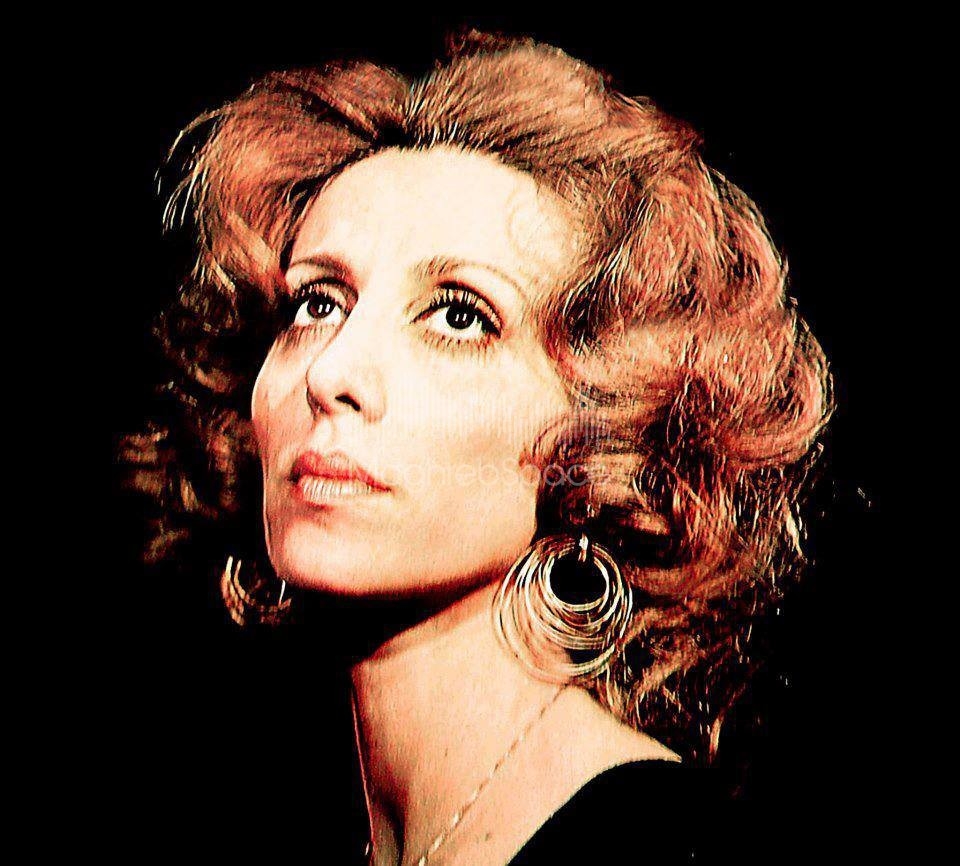 |
| Fairuz, the epitome of grace, captivated and united people with her enchanting voice |
 |
| "The Jeanne D'arc of the Levant", Nazek Al Abid ( whom my grandma is named after) fought against the French occupation in Syria |
Subscribe to:
Posts (Atom)