Thursday, March 24, 2016

The Fault in our News ?


ter·ror·ist
ˈterərəst/
noun
  1. a person who uses terrorism in the pursuit of political aims

      It is such a pity that the world has become so accustomed to terrorist attacks around the world as if they are a normal and expected part of our routine. But what is even more disheartening is how the media presents each incident. You see, terrorism has an exception: whiteness. 
      For example, in the tragedy of Charleston, where a white gunman opened fire in a black church, the media coverage was biased to say the least. The first comments that the media made were how the shooter was most likely "mentally ill" and how he suffered from a "dysfunctional mental health system". Not once did they refer to him as a "terrorist" or a "thug", and perhaps it was because he was white... 
     If killing innocent lives in order to establish a race's supremacy isn't considered terrorism, then we better reform the meaning of terrorism. 
     Compare that to any other crimes committed by people of color; they are almost always referred to as "terrorists" or as "thugs". If the Charleston shooter in not called a terrorist because he had "mental illness", then what about the neglected and racist society that some criminals of color experience ? I am in no way attempting to justify the actions of any criminal, but in order to solve the lasting prejudice in our societies, media needs to equally cover news.
    This leads to another long lasting problem in society. One of the questions that the survey we took in class asked was if " you feel your race is represented", and for minorities, news coverage is crucial in how they are perceived. African Americans on TV are mostly branded as "thugs", so an African American boy will rarely see any positive reaffirmation about their race in media. This will create a feedback loop where African Americans are portrayed as criminals. 

Friday, March 18, 2016

The Conflict Continues...


This has become a very usual, and somewhat expected, occurrence for Palestinians living in the West Bank. The population of Israeli settlements on occupied Palestinians lands have risen by 25% (The Washington Post). These settlements are deemed illegal as they are a violation of the Fourth Geneva Accords. Many activists notice striking similarities between the apartheid system in South Africa in the 90's and the treatment of Palestinians in comparison with Israeli settlers in the West Bank. For example, settlers in the west bank have separate and segregated roads that Palestinians cannot access. Also, Palestinians in the West Bank are subject to Israel's military law while settlers are subject to its civilian law (Haaretz). 
Palestinian citizens who have been living in the west bank for generations, even prior to the creation of the state of Israel, are at risk of being uprooted from their homes in order to make room for Jewish settlers. Just as the cartoon show, the Palestinians' connection to the land is disregarded in order to favor another nation's link to the land. The cartoon portrays natives of the land, such as Jesus, being forced out of their homes. The bulldozer's logo, "West Bank Construction" depicts these Israeli actions in a positive light  through a euphemism. Also, this reflects on Israel's policies that have been aimed to shed a favorable light on its west bank settlements in hopes of deferring the public's attention on their illegality. The caption also specifically blames Netanyahu's government for their increasing support for these settlements. What it also illustrates that a lot of Israeli citizens or soldiers that are involved in these actions are merely just doing their jobs and are being blamed while the central government is the one that is making all of these horrible decisions. 

Friday, March 4, 2016

All About Death

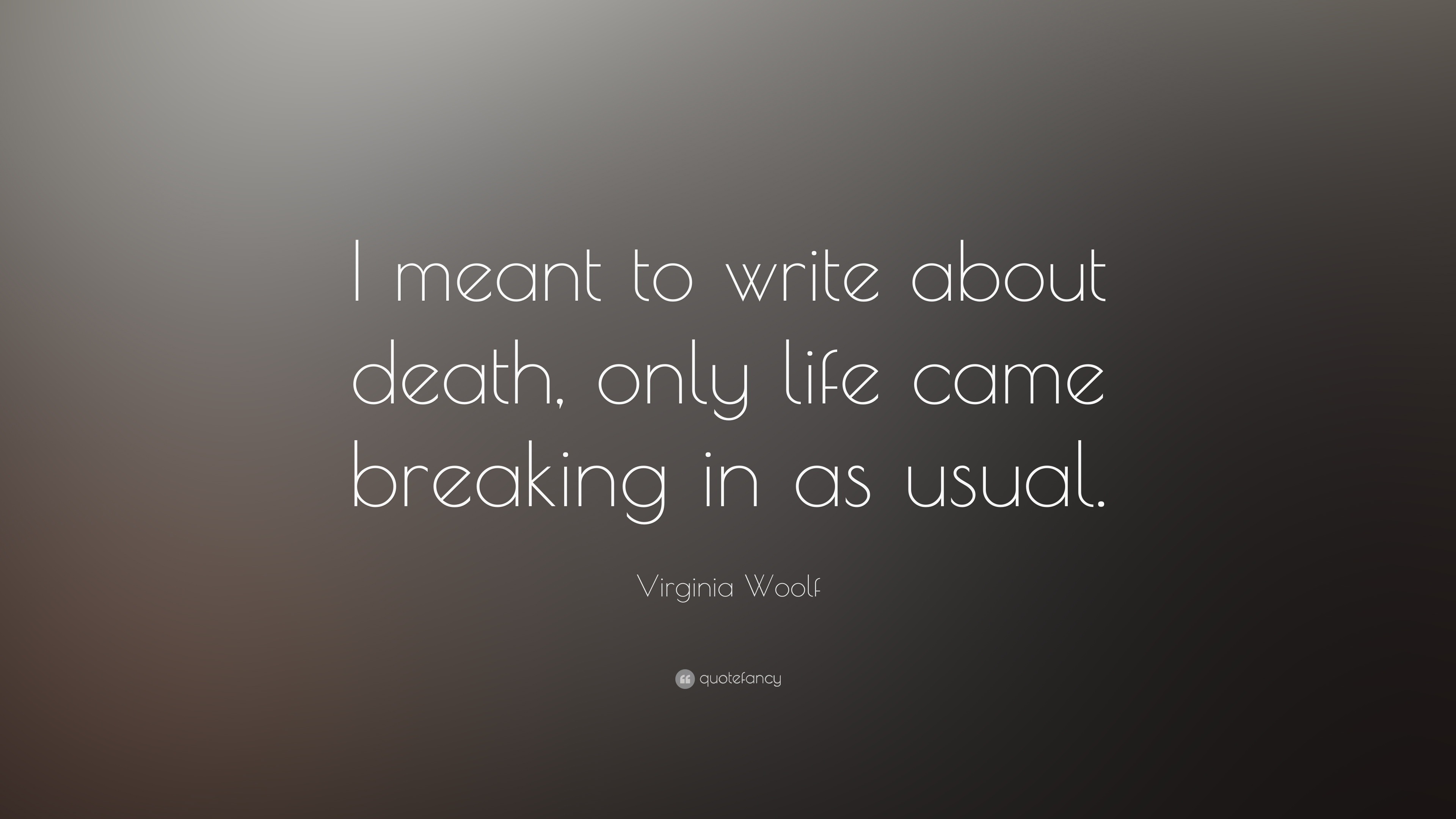
 Videotape and The Death of the Moth intersect in so many aspects, yet they convey different messages about the same dreaded topic- death. Just as Jeannette Walls repeatedly uses fire as a motif in her memoir, death is a common thread between these pieces.Woolf's piece centers more about the inevitability of death; while Delillo uncovers society's obsession of with tragedy. Woolf writes, "death is stronger than I am". She believes that death will always triumph. It will always come. In Delillo's piece, he writes, "You want her to see how it looks". Delillo exposes the psychological level on which American culture has been programmed to commodify tragedies. Just as pies, baseball, hot dogs, and casinos are a staple of the American facade, violence has also joined the list. In a weird, twisted way, it's sort of resembles this election cycle. Some are reiterating how our country might be doomed if a certain someone becomes president - which seems highly unavoidable for some. While others might say that they fear it, but they keep on obsessing over it. In Virginia Woolf's essay, death is natural- a lone ranger.It is not accompanied by the destruction of humans nor by their emotions. It is just death. Quiet and simple. Perhaps, that is why Virginia describes it as "marvelous". The setting Woolf describes complements the "natural" element of the death. She describes "the net", the flock of birds and "the horses" to create a more spontaneous mood. In contrast, in Videotape, death does not act alone. It has a culprit. This time, it is motivated by human actions- it is not natural. In return, it creates an unnatural obsession with death. Delillo uses objects and settings in his essay to further emphasize the man- made catastrophes. He chooses a highway as a location - human engineering, a "video camera" and a television as means to share this tragic incident with the world. He also profiles the characters as "the Kid", "Janet", and "the man" which conveys a more deliberate tone than that of Woolf. f

Wednesday, March 2, 2016

The Boat

     It shows a man in a boat. It is the most usual pastime in this heated summer. You see a middle-aged man in the middle of the Mediterranean.
      It is just a man floating in the sea.
    You know about teenagers and their phones. You know how they get obsessed with them and start filming everything that happens to them. They record everything. If the world ever forgets, their cameras won't.
   It's also the Kid's own horror on display here. He recorded the atrocity, but he also experienced it.
   It shows a man with a soaked, dirty shirt on under a bright orange accessory. There is nothing to see. The man is still siting.
   Of course the man in the sea is not from the Kid's family. He is a stranger who happened to be going through the same agony. He is someone who wishes they were not stranded in the middle of the Mediterranean.
    It is not just another video of a drowning. It is a drowning that was filmed by a teenager who was trying to find shelter, but he ended up watching the sea engulf people.
    The man notices the phone and waves. He smiles at the kid.
    It is a short footage. The kid had just gotten comfortable in the boat to take his phone out. The video is raw. Too raw.
   But there is a component of surprise. You keep on looking not because you don't know what's going to happen - they're in an overfilled rubber boat, of course you know what's going to happen- but because you want to see it again and view it with another perspective.
 The sea is creeping in the background, waiting for the boat to give up and capsize.
  There's something about the image, it's bright yet gloomy. The sun seems to be overshadowed by what's approaching.
  Your eyes are glued to the screen.
   Of course, had the Kid zoomed in on the boat, he would have caught the moment were the rubber just gave up and detached.
   You call your John to see the video, you want him to sympathize with the refugees. You've seen this video so many times. It rolls on and on in your head by itself. But you keep watching. You want to see the moment when the boat capsizes and all 60 people huddled on there scatter into the water.
Take this  simulation to better understand a refugee's journey.